
When most people think about body fat, they picture the fat they can pinch around their waist, hips, or thighs. But there is another type of fat that deserves far more attention: visceral fat.
Unlike the fat you see in the mirror, visceral fat surrounds your internal organs and can have a major impact on your long-term health. The good news is that it is also one of the most responsive types of fat to healthy lifestyle changes.
Understanding visceral fat isn’t about achieving the “perfect” body. It’s about improving metabolic health, lowering disease risk, and supporting long-term wellness.
What Is Visceral Fat?
Your body stores fat in two primary ways.
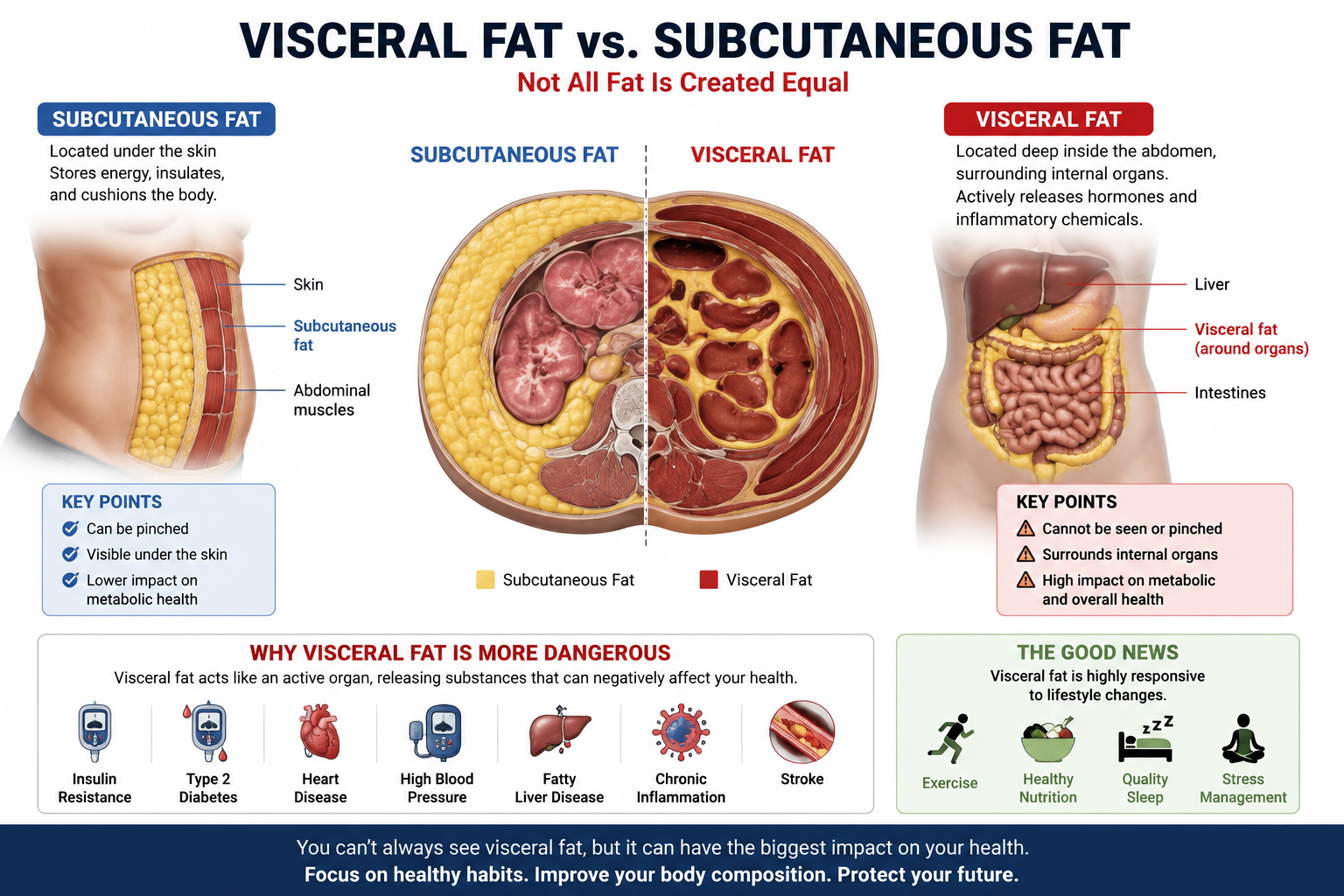
Subcutaneous fat is the fat located just beneath the skin. It cushions the body, stores energy, and helps regulate body temperature.
Visceral fat is stored much deeper inside the abdomen. It wraps around organs such as the liver, pancreas, intestines, and kidneys. A small amount is normal and even necessary because it helps protect these organs. Problems begin when visceral fat accumulates beyond healthy levels.
One surprising fact is that body weight alone doesn’t tell the whole story. Some people have a normal body weight or Body Mass Index (BMI) but still carry excessive visceral fat. This is sometimes referred to as TOFI, which stands for Thin Outside, Fat Inside.
Visceral Fat vs. Subcutaneous Fat
Although both are forms of body fat, they behave very differently.
Subcutaneous fat:
- Located beneath the skin
- Can be pinched with your fingers
- Stores energy
- Helps insulate and cushion the body
- Generally has a lower impact on metabolic health
Visceral fat:
- Located deep inside the abdominal cavity
- Surrounds internal organs
- Cannot be seen or pinched directly
- Produces hormones and inflammatory chemicals
- Is strongly associated with metabolic disease
This is why two people with the same body weight can have very different health risks.
Why Is Visceral Fat Different?
Visceral fat is not simply stored energy. Scientists now recognize it as an active endocrine organ, meaning it produces hormones and chemical messengers that influence many systems throughout the body.
Among these are cytokines, which are proteins released by immune cells and fat tissue that help regulate inflammation. In healthy amounts they support normal immune function. In excess, they can contribute to chronic, low-grade inflammation that stresses the cardiovascular system and other organs.
Visceral fat also releases free fatty acids directly into the portal vein, which carries blood from the digestive tract to the liver. This direct connection allows visceral fat to influence liver function much more than fat stored elsewhere in the body.
Over time, excess visceral fat may contribute to:
- Type 2 diabetes
- High blood pressure
- Heart disease
- Stroke
- Fatty liver disease
- Elevated triglycerides
- Insulin resistance
- Chronic inflammation
- Metabolic syndrome
How Does Visceral Fat Develop?
Visceral fat usually develops gradually over months or years when energy intake consistently exceeds energy expenditure. However, several factors influence where fat is stored.
Poor Nutrition
Diets high in refined carbohydrates, sugary beverages, processed foods, and excess alcohol encourage fat storage around the abdomen.
Physical Inactivity
A sedentary lifestyle reduces calorie expenditure and decreases muscle mass, making visceral fat accumulation more likely.
Chronic Stress
Stress increases production of cortisol, a hormone that helps the body respond to stress. Chronically elevated cortisol may encourage fat storage around the abdominal organs, especially when combined with poor sleep and unhealthy eating habits.
Poor Sleep
Regularly sleeping fewer than seven hours per night can disrupt hormones involved in hunger regulation, appetite, and metabolism.
Aging
As we age, muscle mass naturally declines while body fat often shifts toward the abdomen unless resistance training and good nutrition are maintained.
Hormonal Changes
Lower testosterone in men, declining estrogen after menopause in women, and increasing insulin resistance all make visceral fat accumulation more likely.
The Link Between Visceral Fat and Insulin Resistance
One of the strongest connections researchers have identified is between visceral fat and insulin resistance.
Insulin is a hormone that helps move glucose (blood sugar) from the bloodstream into cells where it can be used for energy.
As visceral fat increases, inflammatory chemicals and excess free fatty acids interfere with insulin’s ability to work efficiently. The pancreas responds by producing more insulin to keep blood sugar under control.
Over time this cycle may lead to:
- Higher fasting insulin levels
- Elevated blood sugar
- Prediabetes
- Type 2 diabetes
Reducing visceral fat often improves insulin sensitivity, making it easier for the body to regulate blood sugar naturally.
How Is Visceral Fat Measured?
Unfortunately, you cannot accurately determine visceral fat simply by looking in the mirror.
Waist circumference can provide a useful estimate, but it cannot determine exactly how much fat surrounds the internal organs.
The most accurate methods include:
- MRI (Magnetic Resonance Imaging)
- CT (Computed Tomized Tomography)
- DEXA body composition scanning with visceral fat estimation
Among these, DEXA body composition scans provide a practical balance of accuracy, convenience, and low radiation exposure. In addition to estimating visceral fat, a DEXA scan measures body fat percentage, lean muscle mass, bone density, and fat distribution throughout the body.
Tracking these measurements over time provides a much better picture of health than body weight alone.
Can You Remove Visceral Fat?
Yes—and this is one of the most encouraging aspects of visceral fat.
Research consistently shows that visceral fat often decreases earlier than subcutaneous fat when healthy lifestyle habits are adopted.
Exercise
A combination of aerobic exercise and resistance training is among the most effective approaches.
Examples include:
- Brisk walking
- Cycling
- Swimming
- Interval training
- Strength training two to four times each week
Exercise improves insulin sensitivity while encouraging the body to use stored fat as fuel.
Build More Muscle
Muscle is one of the body’s most metabolically active tissues. Increasing lean muscle mass raises daily energy expenditure and supports long-term fat loss.
Strength training also helps preserve muscle during weight loss, making it easier to reduce fat while maintaining physical function.
Improve Nutrition
Rather than focusing on restrictive diets, prioritize foods that support metabolic health:
- Lean proteins
- Vegetables
- Fruits
- Whole grains
- Beans and legumes
- Healthy fats such as olive oil, nuts, seeds, and avocados
Limiting highly processed foods, sugary beverages, and excess alcohol can further reduce visceral fat accumulation.
Prioritize Sleep
Aim for seven to nine hours of quality sleep each night to support hormone balance, appetite regulation, and recovery.
Reduce Chronic Stress
Daily movement, meditation, deep breathing, time outdoors, and maintaining strong social relationships all help reduce stress and may indirectly support healthier body composition.
Do Supplements Burn Visceral Fat?
Many supplements claim to specifically target belly fat or visceral fat.
Current scientific evidence does not support the idea that any supplement alone can selectively burn visceral fat.
Some ingredients may provide modest support for weight management when combined with healthy nutrition and regular exercise, but lasting reductions in visceral fat primarily come from consistent lifestyle changes rather than a single product.
How Long Does It Take to Reduce Visceral Fat?
Everyone responds differently, but studies have shown that measurable reductions in visceral fat can occur within several weeks to a few months after improving diet and increasing physical activity.
The exact timeline depends on factors such as:
- Starting body composition
- Exercise consistency
- Nutrition
- Sleep quality
- Age
- Genetics
- Overall health
The goal should not be rapid weight loss but sustainable improvements that support long-term health.
Key Takeaways
- Visceral fat surrounds internal organs and differs significantly from fat stored beneath the skin.
- Excess visceral fat increases the risk of diabetes, cardiovascular disease, fatty liver disease, and metabolic syndrome.
- Diet, inactivity, stress, poor sleep, aging, and hormonal changes all influence visceral fat accumulation.
- DEXA body composition scans provide a practical method for estimating visceral fat while measuring muscle, bone, and overall fat distribution.
- Exercise, strength training, improved nutrition, quality sleep, and stress management remain the most effective evidence-based strategies for reducing visceral fat.
- Sustainable lifestyle changes—not quick fixes—offer the greatest long-term benefits for metabolic health.
References
- Fox CS, Massaro JM, Hoffmann U, et al. Circulation. 2007.
- Després JP. Circulation. 2012.
- Neeland IJ, Ross R, Després JP, et al. The Lancet Diabetes & Endocrinology. 2019.
- Ibrahim MM. Obesity Reviews. 2010.
- American College of Sports Medicine. ACSM Guidelines for Exercise Testing and Prescription.
- World Health Organization. Obesity and Overweight.
- National Institutes of Health. Visceral Adiposity and Cardiometabolic Risk.