
New research suggests that a carbohydrate your body can’t fully digest may influence gut bacteria, insulin sensitivity, and the fat stored deep inside your abdomen.
Watch: The Science of Resistant Starch
Discover how resistant starch travels through the digestive system, interacts with gut bacteria, and may influence metabolic health.
For decades, carbohydrates have been blamed for weight gain, insulin resistance, and metabolic dysfunction. But what if one particular carbohydrate could actually help improve metabolic health?
It’s called resistant starch, and a 2024 study published in Nature Metabolism suggests it may help reduce visceral fat by changing the bacteria living inside your gut. The discovery highlights something increasingly important in metabolic research: what you eat doesn’t just feed your body. It also feeds the microorganisms that may influence how your body functions.
The Fat You Can’t See May Matter Most
Not all body fat behaves the same way. Subcutaneous fat sits directly beneath the skin, while visceral fat accumulates deep within the abdominal cavity, surrounding internal organs. Excess visceral fat is strongly associated with insulin resistance, chronic inflammation, and increased cardiovascular risk.
Researchers are now investigating how the trillions of microorganisms living in our digestive tract may influence biological pathways involved in fat storage and metabolic regulation. And the connection begins with what those bacteria eat.
A Carbohydrate That Takes a Different Path
Most starches are broken down into glucose and absorbed in the small intestine. Resistant starch behaves differently. It passes largely undigested into the colon, where certain gut bacteria ferment it into compounds known as short-chain fatty acids (SCFAs), including butyrate, acetate, and propionate.
These compounds participate in signaling pathways involved in intestinal health, inflammation, and energy metabolism. Butyrate, for example, helps fuel the cells lining the colon and supports intestinal barrier function. The intriguing possibility is that changing what your gut bacteria eat may influence metabolic processes far beyond digestion.
What the Research Revealed
In 2024, researchers published a randomized, double-blind, placebo-controlled crossover trial in Nature Metabolism involving 37 adults with overweight or obesity. Participants consumed a standardized resistant starch preparation during an eight-week intervention, which was compared with a control starch intervention.
Researchers observed improvements in body weight, abdominal fat, insulin sensitivity, and the composition of the intestinal microbiome. Perhaps most interestingly, MRI measurements demonstrated reductions in visceral adipose tissue—the fat surrounding internal organs.
The infographic below illustrates the biological pathway and summarizes the study’s principal findings.
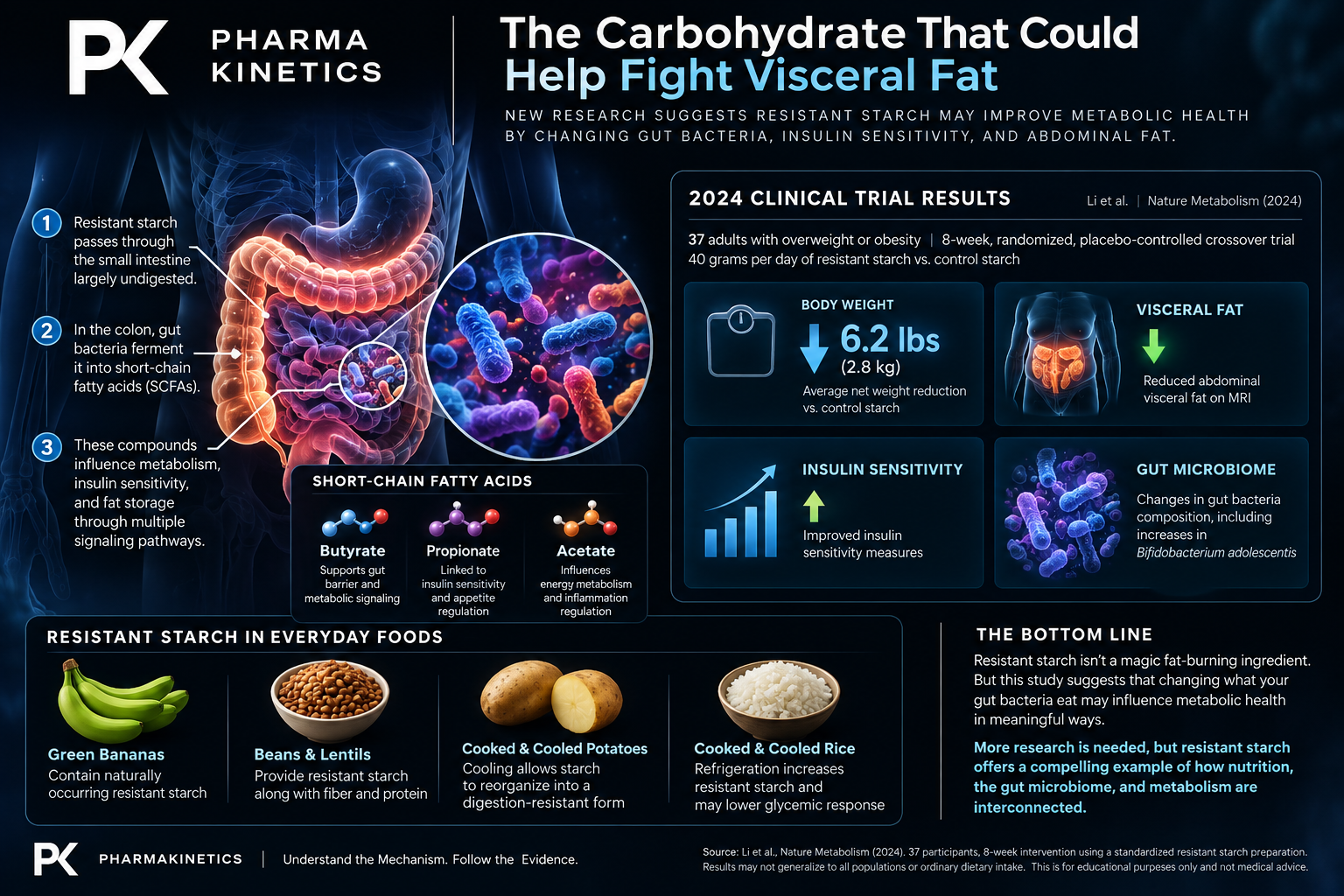
Figure 1. Resistant starch fermentation, short-chain fatty acid production, and metabolic outcomes reported in Li et al., Nature Metabolism (2024). Findings reflect a small controlled trial using a standardized resistant starch preparation.
Could Your Gut Bacteria Influence Fat Storage?
Traditionally, discussions about fat loss focus on calorie intake, physical activity, and insulin. All of these matter, but the gut microbiome adds another layer of complexity.
Microorganisms transform certain dietary compounds into metabolites that communicate with our own cells. Some interact with receptors involved in metabolic signaling, while others may influence intestinal barrier function, bile acid metabolism, and inflammatory pathways.
What you feed your gut bacteria may influence the chemical signals they produce. That doesn’t mean the microbiome overrides energy balance. It means metabolism involves a much larger network of biological interactions than we once appreciated.
You May Already Have Resistant Starch in Your Kitchen
Resistant starch isn’t an exotic laboratory compound. It occurs naturally in familiar foods, including green bananas, beans, lentils, and certain whole grains. It can also form when foods such as potatoes and rice are cooked and then cooled.
During cooling, some starch molecules reorganize into structures that resist digestion—a process known as retrogradation. A 2015 study published in the Asia Pacific Journal of Clinical Nutrition found that refrigerated and reheated white rice contained more resistant starch and produced a lower glycemic response than freshly cooked rice under the tested conditions.
However, cooling these foods doesn’t eliminate their digestible carbohydrates or calories. Eating ordinary resistant-starch-containing foods also isn’t equivalent to consuming the standardized preparation used in the clinical trial.
Is Resistant Starch a New Way to Fight Visceral Fat?
The research is promising, but resistant starch isn’t a magic fat-burning ingredient. The 2024 study was relatively small, lasted eight weeks per intervention, and used a specific resistant starch preparation under controlled dietary conditions.
Larger, longer-term studies are needed to determine whether the findings can be consistently reproduced and which individuals might benefit most. Still, the underlying biology is compelling: the gut microbiome may influence metabolic health through pathways that extend far beyond digestion.
The Pharmakinetics Perspective
Perhaps the most important takeaway isn’t that a carbohydrate might help reduce visceral fat. It’s that our understanding of metabolism continues to evolve.
The gut microbiome is emerging as an important participant in the biological systems that regulate energy balance, inflammation, and metabolic health. Resistant starch reminds us that understanding how a compound works is often more valuable than simply labeling it good or bad.
Sometimes the most interesting discoveries come from understanding familiar compounds in entirely new ways.
Pharmakinetics — Understand the Mechanism. Follow the Evidence.
Supporting Scientific Research
Li H, et al. (2024). Resistant starch intake facilitates weight loss in humans by reshaping the gut microbiota. Nature Metabolism, 6, 578–597.
https://doi.org/10.1038/s42255-024-00988-y
Carter MM, Spencer SP. (2024). Resisting weight gain with prebiotic fibre. Nature Metabolism, 6, 389–391.
https://doi.org/10.1038/s42255-024-00998-w
Sonia S, Witjaksono F, Ridwan R. (2015). Effect of cooling of cooked white rice on resistant starch content and glycemic response. Asia Pacific Journal of Clinical Nutrition, 24(4), 620–625.
https://pubmed.ncbi.nlm.nih.gov/26693746/
Educational disclaimer: This article is intended for scientific education and general information only. It does not constitute medical advice.