
What Is Apoptosis?
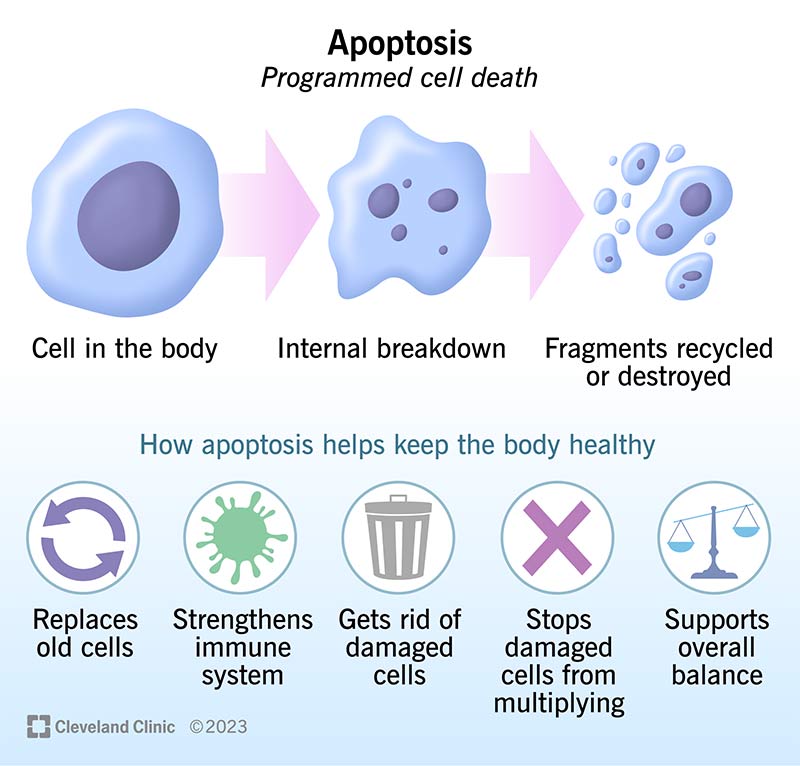
Apoptosis (pronounced ap-uh-TOE-sis) is the body’s natural process of removing old, damaged, or unnecessary cells. Often called programmed cell death, it’s one of the most important ways your body maintains healthy tissues throughout life.
Unlike cells that die from injury or trauma, cells undergoing apoptosis don’t burst open or trigger inflammation. Instead, they carefully break themselves down into small pieces that are safely cleared away by the immune system. Think of apoptosis as your body’s built-in recycling program—it removes cells that are no longer useful while making room for healthy new ones.
Key Takeaways
- Apoptosis is the body’s natural method of removing damaged or unwanted cells.
- It occurs in a controlled way that usually does not cause inflammation.
- The process helps prevent damaged cells from accumulating.
- Healthy apoptosis is essential for normal development, tissue repair, and immune function.
- Scientists continue studying how changes in apoptosis contribute to aging and disease.
Why Is Apoptosis Important?
Every day, billions of cells in the human body are replaced. Apoptosis helps ensure that old or damaged cells are removed before they can interfere with healthy tissue.
This process plays a role in:
- Development: Shapes organs and tissues before birth.
- Immune health: Removes immune cells that are no longer needed after an infection.
- Cancer prevention: Eliminates cells with severe DNA damage before they can continue dividing.
- Tissue maintenance: Keeps organs functioning by balancing new cell growth with cell removal.
Apoptosis vs. Senescence
Although apoptosis and cellular senescence are both involved in cellular aging, they are different processes.
| Apoptosis | Senescence |
|---|---|
| The cell dies and is removed. | The cell remains alive but permanently stops dividing. |
| Helps clear damaged cells. | Prevents damaged cells from multiplying. |
| Usually causes little or no inflammation. | Senescent cells can release inflammatory molecules over time. |
In many cases, a damaged cell may first become senescent. If it cannot be cleared by the immune system, apoptosis may eventually remove it.
Frequently Asked Questions
Is apoptosis a normal process?
Yes. Apoptosis occurs continuously throughout life and is essential for maintaining healthy tissues.
Is apoptosis good or bad?
Neither—it is a normal biological process. Problems arise when too little or too much apoptosis occurs.
Does apoptosis cause inflammation?
Usually no. Because the cell is dismantled in an orderly way, nearby tissues are largely unaffected.
Can apoptosis be increased naturally?
Researchers are actively studying how factors like exercise, nutrition, sleep, and metabolic health influence apoptosis. While these habits support overall cellular health, there is currently no proven way to specifically “boost” apoptosis in healthy people.
Related Topics
- Cellular Senescence – When cells permanently stop dividing but remain alive.
- Autophagy – The cell’s internal recycling system for damaged proteins and organelles.
- DNA Damage – Changes to genetic material that can trigger repair, senescence, or apoptosis.
- Mitochondria – Energy-producing organelles that also help regulate apoptosis.
- Inflammation – The body’s immune response, which differs from the quiet cleanup that occurs during apoptosis.
References
- Kerr JF, Wyllie AH, Currie AR. Apoptosis: A Basic Biological Phenomenon with Wide-ranging Implications in Tissue Kinetics. British Journal of Cancer. 1972;26(4):239–257.
- Elmore S. Apoptosis: A Review of Programmed Cell Death. Toxicologic Pathology. 2007;35(4):495–516.
- National Cancer Institute. NCI Dictionary of Cancer Terms: Apoptosis.
- Alberts B, et al. Molecular Biology of the Cell. 7th Edition.
- National Institute on Aging. Biology of Aging Research.