
Your body may reveal signs of metabolic dysfunction long before noticeable symptoms appear. Changes in blood chemistry can provide important clues about insulin resistance, glucose regulation, cardiovascular risk, and inflammation.
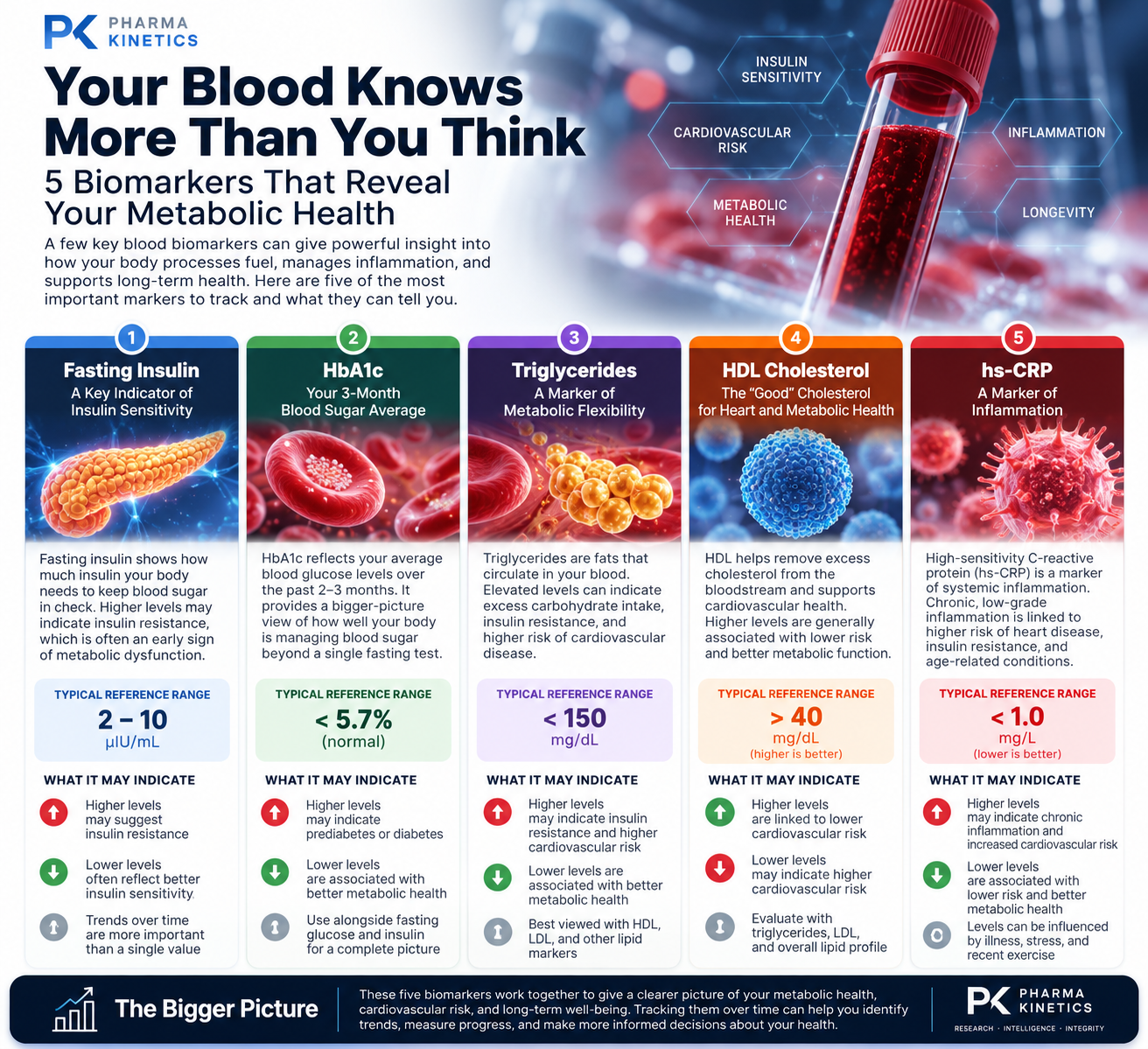
What are the five blood biomarkers worth understanding? Fasting insulin, HbA1c, triglycerides, HDL cholesterol, and high-sensitivity C-reactive protein (hs-CRP) offer complementary insights into metabolic health. No single marker tells the complete story. Understanding how these measurements work together can provide a clearer picture of your health.
Five Biomarkers Worth Understanding
1. Fasting Insulin: An Early Warning Signal
Insulin regulates how your body processes and stores glucose. When cells become less responsive to insulin, the pancreas may compensate by producing more. This means insulin resistance can develop even when blood glucose remains normal. Elevated fasting insulin may provide an early clue, although no universally accepted diagnostic cutoff exists.
2. HbA1c: Your Long-Term Blood Sugar Picture
HbA1c measures average blood glucose exposure over approximately three months. An HbA1c below 5.7% is generally considered normal, 5.7–6.4% indicates prediabetes, and 6.5% or higher may indicate diabetes when appropriately confirmed. Unlike a single glucose reading, HbA1c provides a longer-term view of glucose regulation.
3. Triglycerides: A Metabolic Warning Sign
Triglycerides are fats circulating in your bloodstream. Elevated levels frequently accompany insulin resistance, excess visceral fat, and metabolic dysfunction. Fasting triglycerides below 150 mg/dL are generally considered normal. When triglycerides are elevated alongside low HDL cholesterol, the combination may suggest underlying metabolic disturbances.
4. HDL Cholesterol: Understanding the Bigger Picture
HDL particles help transport cholesterol from peripheral tissues toward the liver. Low HDL cholesterol is frequently associated with insulin resistance and increased cardiovascular risk. However, higher HDL is not always better. HDL should be evaluated alongside triglycerides, LDL cholesterol, and other relevant cardiovascular markers.
5. hs-CRP: Measuring Inflammation
High-sensitivity C-reactive protein is a blood marker used to evaluate low-grade systemic inflammation. Persistently elevated hs-CRP may be associated with obesity, metabolic dysfunction, and cardiovascular disease. An hs-CRP below 1 mg/L has traditionally been associated with lower cardiovascular risk. Results can also rise temporarily following illness, injury, or strenuous exercise.
Why These Biomarkers Matter Together
Metabolic dysfunction rarely appears in a single measurement. Someone may have normal fasting glucose but elevated insulin. Another person may have high triglycerides, low HDL cholesterol, and excess visceral fat. Looking at multiple biomarkers—and how they change over time—can reveal patterns that isolated measurements miss. Blood testing, body composition analysis, blood pressure, and clinical history provide complementary information.
Frequently Asked Questions
Can you have insulin resistance with normal blood sugar?
Yes. The pancreas may produce additional insulin to maintain normal glucose levels, potentially masking early insulin resistance.
Which blood tests help evaluate metabolic health?
Common assessments include HbA1c, fasting glucose, and a lipid panel. Fasting insulin and hs-CRP may provide additional information in selected circumstances.
How often should metabolic biomarkers be tested?
Testing frequency depends on age, medical history, risk factors, medications, and previous results. More frequent testing is not automatically more beneficial.
The Bottom Line
Your blood contains valuable information about how your body regulates energy, processes nutrients, and responds to inflammation.
Understanding these signals can help identify potential risks and support more informed decisions about metabolic health.
The objective isn’t simply to collect more numbers. It’s to understand what those numbers mean together.
Supporting Research
- Matthews DR et al. (1985). Homeostasis model assessment: insulin resistance and β-cell function. Diabetologia. https://doi.org/10.1007/BF00280883
- Sacks DB et al. (2011). Guidelines and recommendations for laboratory analysis in the diagnosis and management of diabetes mellitus. Clinical Chemistry. https://doi.org/10.1373/clinchem.2010.161596
- Miller M et al. (2011). Triglycerides and cardiovascular disease. Circulation. https://doi.org/10.1161/CIR.0b013e3182160726
- Rohatgi A et al. (2014). HDL cholesterol efflux capacity and incident cardiovascular events. New England Journal of Medicine. https://doi.org/10.1056/NEJMoa1409065
- Ridker PM et al. (2002). C-reactive protein and LDL cholesterol in predicting cardiovascular events. New England Journal of Medicine. https://doi.org/10.1056/NEJMoa021993