
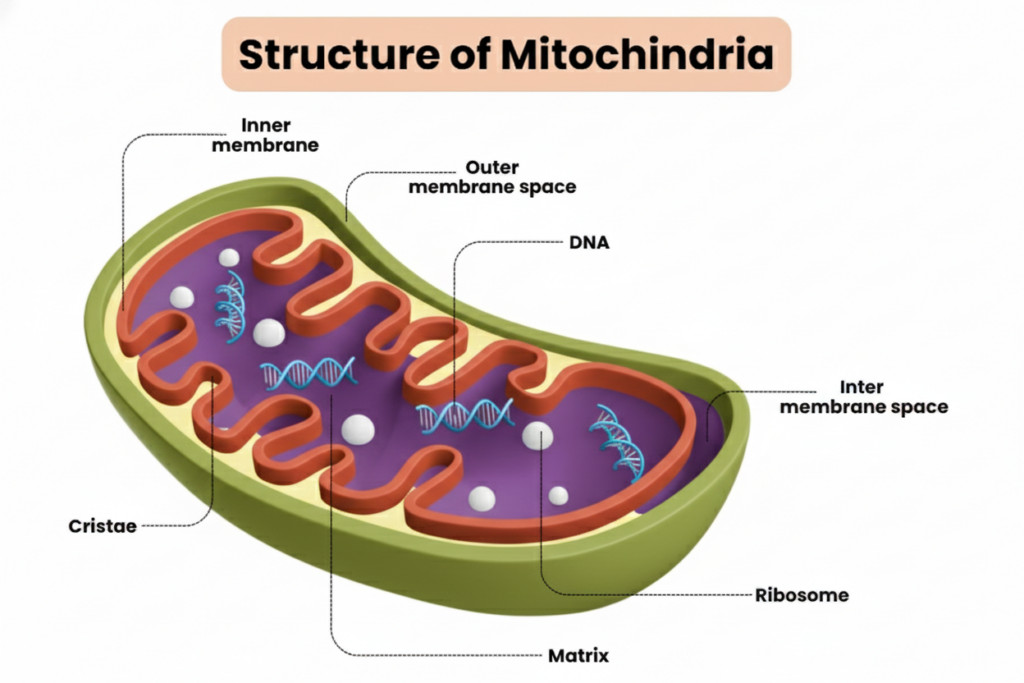
What Are Mitochondria?
Mitochondria are specialized structures found inside nearly every cell in the body. They are often called the “powerhouses of the cell” because they convert nutrients into the energy that cells need to function.
Although best known for producing energy, mitochondria perform many other important jobs. They help regulate metabolism, support cell signaling, control calcium levels, and even participate in processes like apoptosis, or programmed cell death.
Each cell may contain anywhere from a few dozen to several thousand mitochondria depending on how much energy that tissue requires. Organs such as the heart, brain, and muscles contain particularly high numbers because of their constant energy demands.
Key Takeaways
- Mitochondria produce most of the cell’s usable energy.
- They convert nutrients into ATP, the body’s primary energy molecule.
- High-energy organs contain large numbers of mitochondria.
- Mitochondria also help regulate metabolism and cell survival.
- Mitochondrial function naturally changes with age.
Why Is It Important?
Every movement, heartbeat, nerve impulse, and chemical reaction in the body depends on cellular energy. Without healthy mitochondria, cells cannot produce enough ATP to meet these demands.
Scientists are studying mitochondrial health because declining mitochondrial function has been associated with aging and numerous chronic diseases.
How Does It Work?
Mitochondria use oxygen along with nutrients from carbohydrates and fats to produce adenosine triphosphate (ATP) through a process called cellular respiration.
ATP acts as the cell’s primary energy currency, powering nearly every biological process.
In addition to producing energy, mitochondria communicate with the rest of the cell to help regulate metabolism, stress responses, and cell survival.
References
- Alberts B, et al. Molecular Biology of the Cell.
- National Human Genome Research Institute. Mitochondria.
- NCBI Bookshelf. Cell Biology.