
What Is Autophagy?
Autophagy (pronounced aw-TAH-fuh-jee) is the process cells use to break down and recycle their own worn-out or damaged components. The word comes from Greek and literally means “self-eating.” While the name may sound alarming, autophagy is actually one of the body’s most important maintenance systems.
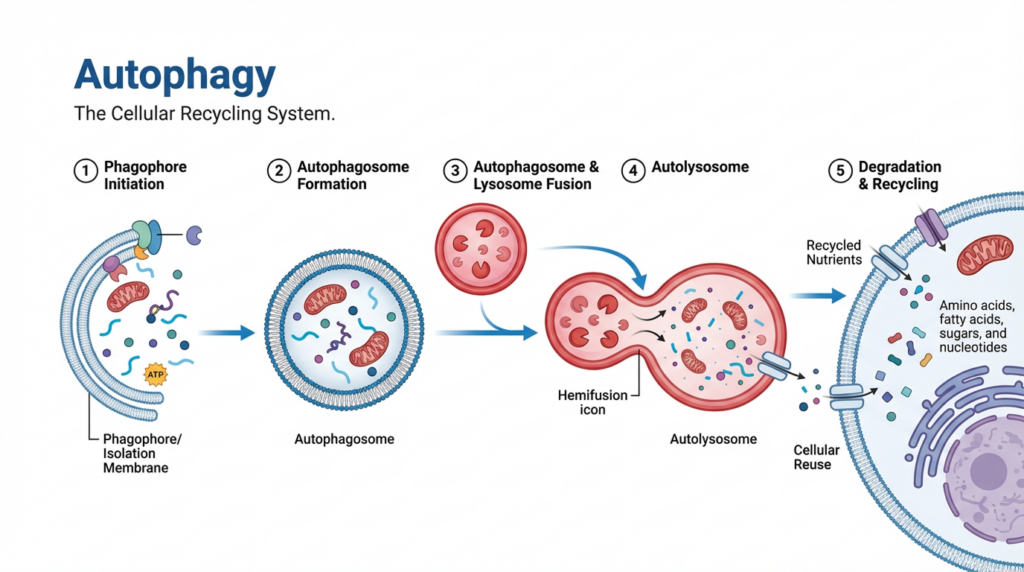
Inside every cell, proteins, mitochondria, and other structures become damaged through normal wear and tear. Rather than allowing this cellular “junk” to accumulate, the cell packages these materials into small sacs that are delivered to specialized compartments called lysosomes, where they are broken down and recycled into new building blocks.
Autophagy occurs continuously throughout life and helps cells remain healthy, especially during periods of stress such as fasting, exercise, or nutrient deprivation.
Key Takeaways
- Autophagy is the cell’s natural recycling system.
- It removes damaged proteins and worn-out cellular components.
- Healthy autophagy helps maintain normal cell function.
- The process becomes increasingly important during cellular stress.
- Researchers are studying autophagy for its role in aging, neurodegenerative diseases, and metabolic health.
Why Is It Important?
Without autophagy, damaged cellular components would gradually accumulate and interfere with normal function. By continually removing worn-out material, cells can recycle valuable nutrients, improve efficiency, and maintain internal balance.
Autophagy also helps cells adapt during periods of limited nutrients by recovering materials that can be reused for energy and repair.
Because of these roles, scientists believe autophagy contributes to healthy aging and may influence many age-related diseases.
How Does It Work?
Autophagy begins when the cell identifies damaged or unnecessary material.
A membrane forms around the material, creating a structure called an autophagosome. This structure then merges with a lysosome, an organelle filled with digestive enzymes.
The enzymes break the contents down into smaller molecules that the cell can reuse to build new proteins, membranes, and other cellular components.
References
- Mizushima N, Komatsu M. Autophagy: Renovation of Cells and Tissues. Cell. 2011.
- Levine B, Kroemer G. Biological Functions of Autophagy Genes. Cell. 2019.
- National Center for Biotechnology Information (NCBI). Autophagy.